
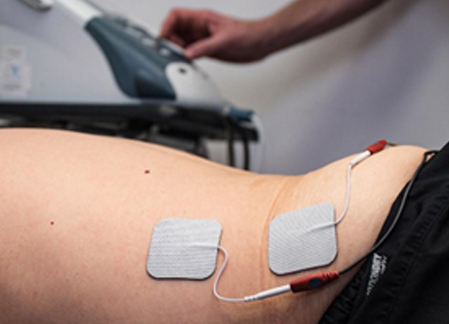
Interferential Therapy (IFT)

  • Home
  • Therapies We Offer

Interferential Therapy (IFT) in Physiotherapy

Advanced Electrotherapy for Pain Relief and Faster Recovery

IFT is one of the most effective and commonly used electrotherapy treatments in modern physiotherapy because it delivers therapeutic stimulation deep into muscles, joints, and soft tissues with minimal discomfort at the skin surface. This makes it particularly beneficial for chronic pain, post-surgical rehabilitation, sports injuries, arthritis, and musculoskeletal disorders.

What Is Interferential Therapy (IFT)?

Interferential Therapy (IFT) is a widely used electrotherapy modality in physiotherapy for pain relief, reduction of swelling, muscle stimulation, and acceleration of tissue healing. It is a safe, non-invasive treatment in which two medium-frequency electrical currents intersect within the body tissues to produce a low-frequency therapeutic current known as the beat frequency.

For example:

  • Current A = 4000 Hz
  • Current B = 3980 Hz
  • Beat Frequency = 20 Hz

The difference between the two currents creates a 20 Hz beat frequency directly within the tissues. This low-frequency stimulation provides therapeutic effects such as pain relief, improved blood circulation, reduction of inflammation, muscle activation, and faster healing.

Unlike conventional low-frequency electrical stimulation, Interferential Therapy uses medium-frequency currents that pass more comfortably through the skin, allowing deeper penetration without causing significant discomfort. As a result, IFT is highly effective in treating conditions such as back pain, neck pain, knee osteoarthritis, frozen shoulder, ligament injuries, muscle strains, sciatica, and post-operative swelling.

At ProHealth Bone & Joint Speciality Clinic, Kharghar, Interferential Therapy is used as part of comprehensive rehabilitation programs under the supervision of Dr Suman Gupta and Dr Rahul Gupta to help patients recover faster and return to their daily activities with reduced pain and improved function.


How Does Interferential Therapy Work?

IFT works through several mechanisms:

1. Pain Gate Control

High-frequency stimulation activates large sensory nerve fibers (A-beta fibers), which block pain signals carried by smaller pain fibers (A-delta and C fibers) before they reach the brain.

2. Endorphin Release

Certain frequencies stimulate the body's natural pain-relieving chemicals (endorphins).

3. Increased Blood Circulation

IFT improves local blood flow, bringing oxygen and nutrients to injured tissues and removing waste products.

4. Reduction of Swelling

Enhanced lymphatic and venous drainage helps reduce oedema and inflammation.

5. Muscle Stimulation

Low-frequency settings can produce muscle contractions for strengthening and re-education.

6. Accelerated Tissue Healing

Enhanced circulation and cellular activity support faster repair of ligaments, tendons, and muscles.


Types of Interferential Therapy

Types of Interferential Therapy

Types of Interferential Therapy

Electrodes remain fixed over the painful area.

Electrodes remain fixed over the painful area

Electrodes are moved during treatment to cover a larger region.


Based on Frequency Modulation

Constant Frequency

A fixed beat frequency is maintained throughout treatment.

Frequency Sweep

The frequency varies automatically to prevent tissue accommodation.

Vector IFT

The interference field rotates, allowing treatment of a broader area.


Based on Number of Electrodes

Four-Pole (Quadripolar) IFT

  • Uses four electrodes arranged in a crisscross pattern. Ideal for deep and diffuse pain.

Two-Pole (Premodulated/Bipolar) IFT

  • Uses two electrodes and is suitable for smaller treatment areas.

Frequency Settings and Their Uses

Beat Frequency

  • 80-150 Hz
  • 1-10 Hz
  • 10-50 Hz
  • 0-100 Hz sweep

Clinical Effect

  • Pain relief
  • Endorphin release
  • Muscle stimulation
  • Improved circulation and oedema reduction

Duration and Number of Sessions

Typical treatment parameters:

  • Session Duration: 10–20 minutes per session
  • Frequency: Daily or alternate days
  • Intensity: Adjusted to produce a strong but comfortable tingling sensation
  • Number of Sessions: Typically 5–15 sessions depending on the condition and severity

Some patients experience relief after just a few sessions, while chronic conditions may require longer treatment programs.


Conditions Treated with Interferential Therapy

IFT is highly effective for a wide range of orthopaedic and neurological conditions, including:

Joint Pain

  • Knee Osteoarthritis
  • Hip Pain
  • Shoulder Pain
  • Frozen Shoulder

Spine Conditions

  • Cervical Spondylosis
  • Slip Disc (Disc Herniation)
  • Sciatica
  • Spinal Canal Stenosis

Sports Injuries

  • Muscle Strains
  • Ligament Sprains
  • Tendon Injuries

Post-Surgical Rehabilitation

  • Total Knee Replacement Recovery
  • ACL Reconstruction Rehabilitation
  • Fracture Rehabilitation

Swelling and Edema

  • Post-traumatic swelling
  • Post-operative edema
  • Lymphatic congestion

Neuropathic Pain

  • Neuralgia
  • Herpes Zoster Pain
  • Causalgia

Physiological Effects of IFT

Interferential Therapy can:

  • Reduce pain and inflammation
  • Increase blood circulation
  • Cause vasodilation
  • Improve tissue metabolism & REMOVES METABOLIC WASTE PRODUCTS
  • Reduce swelling and edema
  • Stimulate muscles
  • Prevents muscle atrophy
  • Restore range of motion
  • Promote healing of ligaments and soft tissues

What Does IFT Feel Like?

During treatment, patients usually experience:

  • Gentle tingling sensation
  • Mild vibration or pulsing
  • Comfortable rhythmic stimulation

The intensity is adjusted according to patient comfort, and the treatment is generally painless, comfortable and relaxing.


IFT vs TENS Therapy

Feature

  • Penetration Depth
  • Comfort
  • Main Uses
  • Electrode Setup

IFT

  • Deeper tissues
  • More comfortable
  • Pain relief + healing + edema
  • 2 or 4 electrodes

TENS

  • More superficial
  • May cause stronger skin sensation
  • Primarily pain control
  • Usually 2-4 electrodes

Contraindications: When IFT Should Be Avoided

IFT should be avoided in patients with:

  • Deep Vein Thrombosis
  • Cancer in the treatment area
  • Cardiac Pacemaker
  • Pregnancy (over abdomen or pelvis)
  • Active infection
  • Severe loss of sensation
  • Open wounds
  • Bleeding disorders
  • Severe arterial disease
  • Unreliable or uncooperative patients

Possible Side Effects

IFT is very safe when administered by trained physiotherapists. Rare side effects may include:

  • Mild skin irritation
  • Temporary redness at electrode sites
  • Slight discomfort if intensity is too high

Advantages of Interferential Therapy

  • Non-invasive and drug-free
  • Comfortable treatment
  • Effective for both acute and chronic pain
  • Reduces swelling
  • Promotes faster healing
  • Can be combined with exercise therapy

Interferential Therapy at ProHealth Bone & Joint Speciality Clinic

At ProHealth Bone & Joint Speciality Clinic, Kharghar, we use Advanced Interferential Therapy as part of comprehensive physiotherapy and pain management programs under the guidance of:

Dr. Suman Gupta – Physiotherapist & Podiatrist

IFT is commonly used for knee pain, back pain, neck pain, sports injuries, post-surgical rehabilitation, and arthritis management.


Why Choose ProHealth for IFT in Kharghar?

  • Advanced physiotherapy equipment
  • Personalized treatment plans
  • Expert orthopaedic and physiotherapy team
  • Evidence-based rehabilitation
  • Convenient location in Kharghar, Navi Mumbai

Book Your Physiotherapy Session

If you are suffering from chronic pain, arthritis, sports injury, or post-surgical discomfort, Interferential Therapy can provide significant relief and support faster recovery.

ProHealth Bone & Joint Speciality Clinic, Kharghar

📞 Call: 7045271001| 8286045451

📍 Navi Mumbai